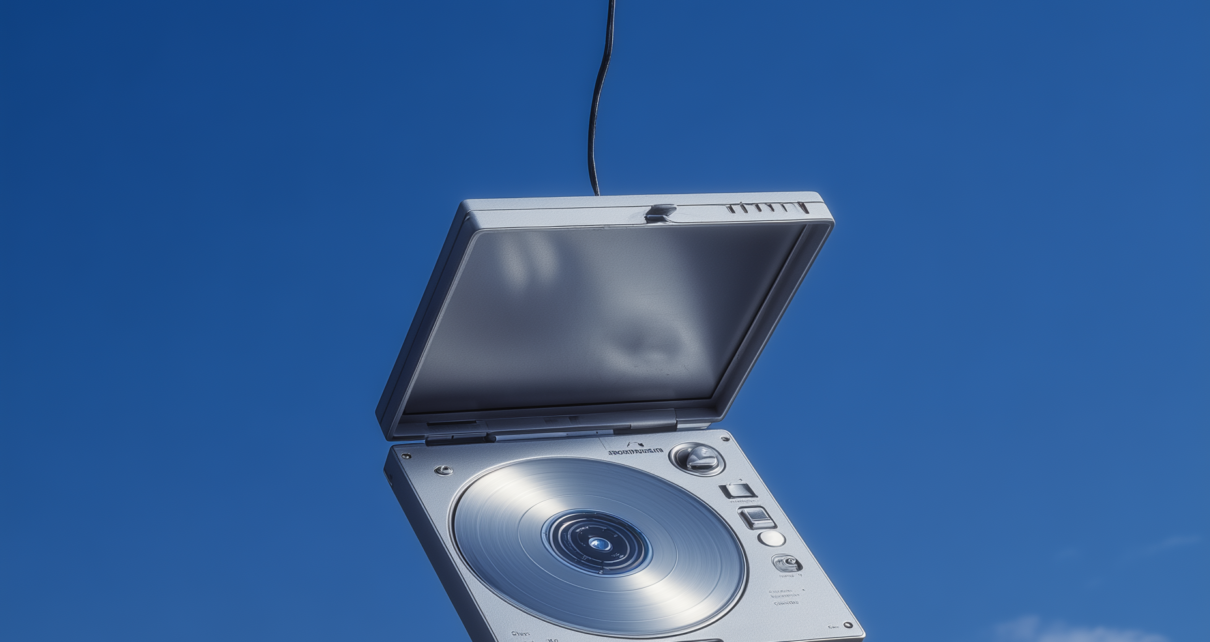
There is a generation of music listeners whose habits were shaped by three very different eras. They bought or borrowed CDs, filled iPods with carefully chosen tracks, and later moved into the endless world of Spotify and streaming platforms. They did not grow up with one stable way of listening. Instead, they learned music through transition. Because of this, their relationship with songs, albums and playlists is unusually layered.
This generation remembers music as something physical. A CD was not just a file or a button on a screen. It had weight. It had a cover, a booklet, lyrics, photographs and sometimes even a smell connected to plastic cases and printed paper. Buying an album meant choosing carefully, because music was not unlimited. A listener might spend days or weeks with the same record simply because it was the one they owned. Songs had to be heard in sequence. Even weaker tracks became familiar because skipping was not always the default behavior.
That experience created patience. People who grew up with CDs often learned to understand albums as complete worlds. The first track introduced a mood. The middle carried the emotional weight. The final song felt like an ending. This way of listening encouraged attention to structure. It also made music feel tied to memory. A CD could belong to a summer, a bedroom, a car ride, a friendship or a first serious feeling.
Then came the iPod and the MP3 era. Suddenly, music became portable, personal and editable. Listeners could carry hundreds or thousands of songs in a pocket. This was revolutionary, but it still required effort. Music had to be downloaded, imported, organized, renamed, sorted and synced. Playlists were handmade. Libraries felt personal because they reflected choices, not only recommendations.
The iPod changed the idea of ownership. A person no longer needed to carry discs, but they still felt that the music library was theirs. It lived on a device. It could be arranged by artist, album, genre or mood. People built soundtracks for walking to school, riding the bus, studying, traveling or feeling dramatic alone at night. The shuffle button created surprise, but it was surprise inside a self-built universe.
This period shaped a different kind of listener: someone who valued control. The CD era taught patience; the iPod era taught curation. People learned to make playlists not because an algorithm suggested them, but because a certain emotional state needed a certain order of songs. A breakup playlist, a workout playlist or a late-night playlist could become almost autobiographical. It was not just music management. It was identity management.
Spotify and other streaming platforms changed everything again. Music stopped feeling scarce. It also stopped feeling fully owned. Almost any song could be reached in seconds. Discovery became easier, but attention became more fragile. Instead of asking, “What music do I have?” listeners began asking, “What should I play now?” The answer increasingly came from platforms, algorithms, editorial playlists and social trends.
For people who grew up between these formats, streaming is both convenient and unsettling. They enjoy access. They like being able to find a forgotten song instantly, explore an artist’s entire catalog or discover music from another country without searching through stores or forums. But many also feel that something has been lost. The abundance of music can make each song feel less permanent. When everything is available, fewer things feel chosen.
This is why their music habits often look mixed. They use Spotify, but they may still think in albums. They follow playlists, but they also build their own. They enjoy recommendations, but they do not fully trust them. They may listen to new releases digitally while keeping old CDs in boxes. They may no longer own an iPod, but they remember the emotional clarity of having a music library that felt personally assembled.
This generation also has a special relationship with nostalgia. Their nostalgia is not only for certain songs, but for the way music used to arrive. They remember saving money for an album, burning CDs for friends, downloading tracks slowly, fixing metadata, choosing album artwork, and making playlists that were not instantly replaceable. These rituals gave music a sense of effort. Effort made the result feel more meaningful.
At the same time, they are not purely anti-digital. They know that streaming has opened music culture in powerful ways. Independent artists can reach listeners without traditional gatekeepers. Old songs can return through playlists, films or social media. Genres are easier to cross. A person can move from indie pop to 1970s soul, from Japanese city pop to bedroom folk, from classic rock to experimental electronic music in one evening.
The tension is not between old and new. It is between depth and speed. People who grew up between CDs, iPods and Spotify often want both. They want the freedom of streaming, but the emotional depth of album listening. They want discovery, but not endless distraction. They want playlists, but not a life where every listening choice is outsourced to a recommendation engine.
This has influenced how many of them listen today. Some return to vinyl or CDs not because they reject technology, but because physical formats create boundaries. A record or CD asks the listener to stay longer. Others create private playlists with the care they once gave to mixtapes. Some listen to full albums on streaming platforms as a quiet act of resistance against the endless scroll. Others use algorithms as starting points, then save only the songs that feel personally meaningful.
For musicians and music schools, this generation is important because it understands several listening languages at once. They can explain album culture to younger listeners who grew up inside playlists. They can also understand why younger audiences expect instant access and short-form discovery. They are translators between physical, digital and algorithmic music culture.
Their habits show that music is never only sound. It is also format, ritual, memory and control. The way people find music changes the way they value it. The way they store it changes the way they remember it. The way they share it changes the way it becomes part of their identity.
People who grew up between CDs, iPods and Spotify carry a rare kind of musical memory. They know what it means to own music, to organize music and to stream music. They have lived through scarcity, curation and abundance. That makes their listening habits complex, sometimes nostalgic, but also deeply aware. They understand that the real question is not only what we listen to, but how the method of listening changes our relationship with the songs themselves.